EXTRA 10% OFF ON FIRST ORDER
PRE-SALES
Currency




- $39.77 USD
$65.00 USD- $39.77 USD
- Unit price
- per
Couldn't load pickup availability

The Best First Mod for WALL-E (LEGO Ideas)
Caring for the WALL-E (LEGO Ideas) Between Runs
Dry-fit the major components before final assembly, because catching a mismatch early is far easier on the WALL-E (LEGO Ideas) than discovering it after the panels return. The goal of the first runs is consistency, not drama; a WALL-E (LEGO Ideas) that moves cleanly and predictably is ready for more. A soft brush after every few runs keeps dust out of the moving parts of the WALL-E (LEGO Ideas), where it would otherwise add friction and wear. If something feels off, stop and inspect rather than pushing through, because a small correction now saves a real repair later.
Tuning the WALL-E (LEGO Ideas) to Feel Right
Keep the battery and receiver mounted where the body flexes least, so the electronics of the WALL-E (LEGO Ideas) stay still and the connectors stay secure. Begin with a slow pass and build speed gradually, which lets the WALL-E (LEGO Ideas) reveal any small issue while it is still harmless. Charge the battery fully before a session and let it cool before charging again, a habit that keeps the WALL-E (LEGO Ideas) dependable for the long term. The best conversions are the ones you stop thinking about, where the WALL-E (LEGO Ideas) simply works every time you switch it on.
A Smoother WALL-E (LEGO Ideas) in a Few Steps
After the first session, go back over the fasteners and joints, because new parts settle and the WALL-E (LEGO Ideas) benefits from a quick recheck. The WALL-E (LEGO Ideas) responds best to smooth, deliberate inputs rather than sudden movements, so ease into the throttle and let it settle. Keep a short after-run routine: check the WALL-E (LEGO Ideas) for loose parts, wipe it down, and note anything that felt unusual while driving. Document the cable paths with a quick photo before closing the panels, and future maintenance on the WALL-E (LEGO Ideas) becomes far easier.
Finding the right motor for lego Technic builds is usually the hard part, and the ZENE Bricks Power Functions kit solves that for the WALL-E (LEGO Ideas).
Fitting the WALL-E (LEGO Ideas) Cleanly
Work on a soft, clean surface and keep the removed pieces grouped in the order they came off, because careless handling is the fastest way to scratch the finish of the WALL-E (LEGO Ideas). Give the WALL-E (LEGO Ideas) plenty of open space for the first run, because a calm environment makes it easier to judge how the model behaves. If the WALL-E (LEGO Ideas) will sit unused for a while, store the battery separately at a comfortable charge to protect the electronics. A little patience during installation always pays off later, and the WALL-E (LEGO Ideas) is a model that rewards careful, deliberate work.
Checking the WALL-E (LEGO Ideas) Before You Drive
Before the panels close, turn the drive path slowly by hand and listen for roughness; the WALL-E (LEGO Ideas) should rotate with an even, gentle resistance and no tight spots. If the WALL-E (LEGO Ideas) hesitates or runs unevenly, stop and check the basics before pushing harder; most early faults are simple alignment or wiring issues. Small observations caught early are what keep the WALL-E (LEGO Ideas) feeling as tight after months as it did on the first drive. Once everything is settled, the WALL-E (LEGO Ideas) needs only light care and a consistent routine to stay sharp for years of running.
First Runs With the WALL-E (LEGO Ideas)
Route the cables away from moving parts and give each connector a little slack, because a tidy wiring path is what keeps the WALL-E (LEGO Ideas) dependable. Watch how the WALL-E (LEGO Ideas) starts and stops, because clean, controlled motion is a better sign of a correct install than top speed ever is. The WALL-E (LEGO Ideas) rewards consistency more than any single clever trick, and the routine quickly becomes second nature. A clean, organized bench makes the whole job easier, because it is far harder to lose a pin or misplace a panel when everything has its place.
For AFOLs and LEGO fans who built the WALL-E (LEGO Ideas), the first powered run is the moment the model finally earns its motion, and it rarely returns to the shelf for long. The little robot's shuffle is sweetly expressive.
| Product Name | LEGO Ideas WALL-E |
|---|---|
| Pieces | 677 |
| Release Date | September 1, 2015 |
| Category | LEGO Ideas |
| Set Number | 21303 |
About LEGO Ideas WALL-E
The proportions and mechanical layout of the WALL-E (LEGO Ideas) leave just enough room for a clean drivetrain, which is a quiet clue that the set was practically waiting for this upgrade. The ZENE Bricks PF kit is designed to follow the existing axle and gear paths of the WALL-E (LEGO Ideas), so the installation stays tidy and the finished model keeps its clean proportions. Owners often find that a motorized WALL-E (LEGO Ideas) gets far more attention than a static one, simply because it now does something worth showing.
As a display piece the WALL-E (LEGO Ideas) is strong; as a working model it is stronger still, because the motion reveals details that are easy to miss at rest. Because the WALL-E (LEGO Ideas) is built around logical mechanical routes, the upgrade slots into place without reworking the body or forcing panels out of position. The upgrade extends the life of the WALL-E (LEGO Ideas) in a collection, because a model that moves keeps earning its place rather than gathering dust.
The WALL-E (LEGO Ideas) represents exactly the kind of set that benefits most from motorization: a build with a clear mechanical character that only needs power to come alive. The installation centers on the drive path rather than the outer shell, which means the visible details of the WALL-E (LEGO Ideas) stay exactly as the original build left them. With the WALL-E (LEGO Ideas) running on ZENE Bricks PF hardware, every session is a small reminder of why the set was worth building in the first place.
The WALL-E (LEGO Ideas) was always a natural candidate for a motorized conversion, because its design language is built around motion and mechanical presence rather than static display. Careful cable routing and a clean gear mesh are what keep the WALL-E (LEGO Ideas) running quietly, and the kit is laid out to make both easy to achieve. The real reward is reliability: the WALL-E (LEGO Ideas) starts when asked, moves the way it should, and stays ready for the next run.
Everything about the WALL-E (LEGO Ideas) suggests a machine that wants to move, from its mechanical detailing to the way the major subassemblies are arranged, which is why a ZENE Bricks PF kit feels like the intended next step. The chassis of the WALL-E (LEGO Ideas) is firm enough to carry the added hardware without sagging, so the alignment holds true run after run. The WALL-E (LEGO Ideas) becomes a conversation piece in motion, and that is a far more memorable thing than a model that only sits still.
Where a purely decorative model earns a single look, the WALL-E (LEGO Ideas) invites interaction, and the conversion simply gives that invitation an answer. Most of the installation work on the WALL-E (LEGO Ideas) happens in the mechanical core, while the signature panels and details remain untouched. What the WALL-E (LEGO Ideas) gains from the conversion is not just speed but presence, a sense that the machine is finally doing what it was designed to do.
For AFOLs who build, collect, and convert, the WALL-E (LEGO Ideas) is the kind of project that keeps rewarding the effort long after the first powered run.
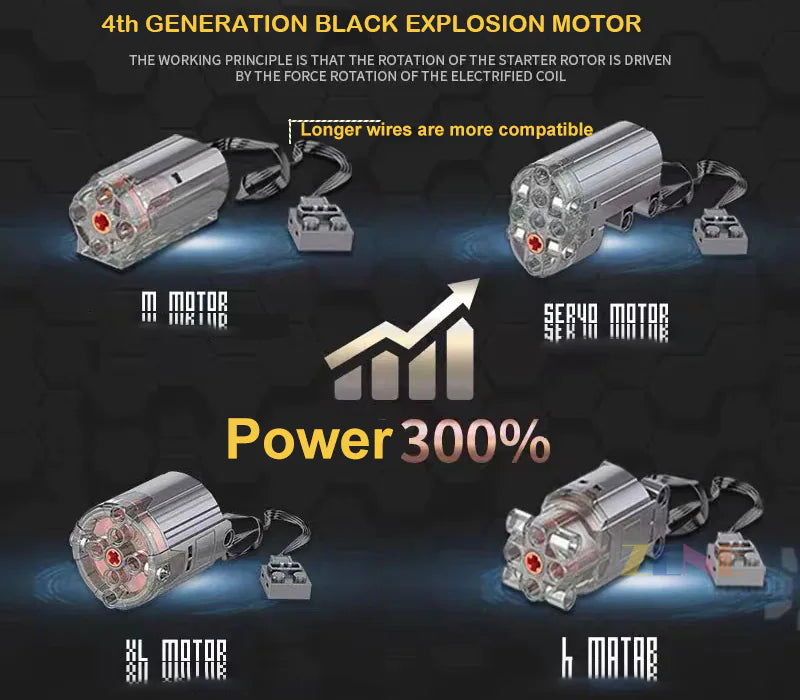
Build a beautifully detailed LEGO® version of WALL•E #21303—the last robot left on Earth! With low latency PF Motor Kit through mobile phone or operating handle Remote Control, high compatibility, smooth installation and texture. We provide powerful motorized kit and step-step manual to let it run quickly and enjoy the sense of accomplishment of the modification. Perfect combination of Technic and Ideas.

- Step-step modification instructions in PDF format provided.
- New generation motors
- Lithium battery
- Remote Control (supporting mobile phone APP control)
- Modification Accessories.
- Screwdriver bit, USB charging line, metal shaft (not required for all products)
- Power Functions Kit only, not LEGO sets.
- It is recommended to refit simultaneously during build.
- Material: Eco-friendly ABS plastic. 
![]()
What maintenance does the WALL-E (LEGO Ideas) need after the upgrade?
A quick after-run check is enough: wipe the WALL-E (LEGO Ideas) down, confirm the connectors are seated, and store it somewhere dry and stable.
How does the WALL-E (LEGO Ideas) behave once it is motorized?
The WALL-E (LEGO Ideas) feels balanced and responsive after the upgrade, with clean acceleration and control that suit its design.
Will the WALL-E (LEGO Ideas) motor kit fit a completed model?
Yes. Only the sections of the WALL-E (LEGO Ideas) that carry the new drivetrain need to be reached, and each one is explained clearly in the guide.
Related Products
- $39.77 USD
$65.00 USD- $39.77 USD
- Unit price
- per
- $39.77 USD
$65.00 USD- $39.77 USD
- Unit price
- per
- $39.77 USD
$65.00 USD- $39.77 USD
- Unit price
- per
- $39.77 USD
$65.00 USD- $39.77 USD
- Unit price
- per
- $39.77 USD
$65.00 USD- $39.77 USD
- Unit price
- per
- $39.77 USD
$65.00 USD- $39.77 USD
- Unit price
- per
- $39.77 USD
$65.00 USD- $39.77 USD
- Unit price
- per
- $39.77 USD
$65.00 USD- $39.77 USD
- Unit price
- per
- $39.77 USD
$65.00 USD- $39.77 USD
- Unit price
- per
- $39.77 USD
$65.00 USD- $39.77 USD
- Unit price
- per
Power Functions Series
Latest Posts
- Choosing a selection results in a full page refresh.